

Maximizing Efficiency with Custom PCB Solutions

In the world of electronics manufacturing, efficiency is paramount. Custom printed circuit board (PCB) solutions offer a strategic advantage by tailoring designs and assembly processes to specific project needs. This approach reduces waste, shortens production cycles, and enhances product reliability. I will walk you through how leveraging custom PCB assembly can transform your manufacturing workflow and deliver measurable benefits.
The Role of Custom PCB Solutions in Streamlining Production
Custom PCB solutions allow precise control over every aspect of the board design and assembly. By specifying materials, layer counts, and component placements, you can optimize the board for performance and manufacturability. This reduces the risk of errors and rework during production.
For example, selecting the right substrate material can improve thermal management, which is critical in aerospace and automotive applications. Custom trace routing can minimize signal interference, enhancing device reliability in medical and defense electronics.
Additionally, custom PCB solutions enable better integration with automated assembly lines. Designing boards with standard footprints and clear labeling facilitates faster pick-and-place operations and soldering. This reduces manual intervention and speeds up throughput.

Custom PCB designed for optimized assembly and performance
Key Benefits of Custom PCB Assembly
Custom PCB assembly offers several advantages that directly impact efficiency and product quality:
Reduced Lead Times: Tailored designs eliminate unnecessary complexity, allowing faster fabrication and assembly.
Lower Costs: Optimized layouts reduce material waste and minimize the need for expensive rework.
Improved Reliability: Custom specifications ensure components are placed and soldered correctly, reducing failure rates.
Scalability: Custom PCBs can be designed for easy scaling from prototypes to full production runs.
Compliance: Meeting industry-specific standards is easier with custom designs that incorporate required certifications from the start.
By focusing on these benefits, companies in aerospace, defense, medical device, access control, automotive, and consumer electronics sectors can achieve consistent, high-quality results.
How much does it cost to have a custom PCB made?
Cost is a critical factor when considering custom PCB assembly. Several variables influence the final price:
Board Complexity: More layers, finer traces, and specialized materials increase costs.
Quantity: Larger production runs reduce per-unit costs due to economies of scale.
Component Selection: High-reliability or specialized components add to the expense.
Assembly Process: Automated assembly is generally more cost-effective for large volumes, while manual assembly suits low-volume or complex prototypes.
Testing and Certification: Additional testing for compliance with aerospace or medical standards can increase costs.
For example, a simple two-layer PCB for consumer electronics may cost a few dollars per unit in volume. In contrast, a multi-layer board with high-temperature materials and strict testing for aerospace applications can cost significantly more.
To manage costs effectively, I recommend working closely with your contract manufacturer to balance design requirements with budget constraints. Early collaboration can identify cost-saving opportunities without compromising quality.
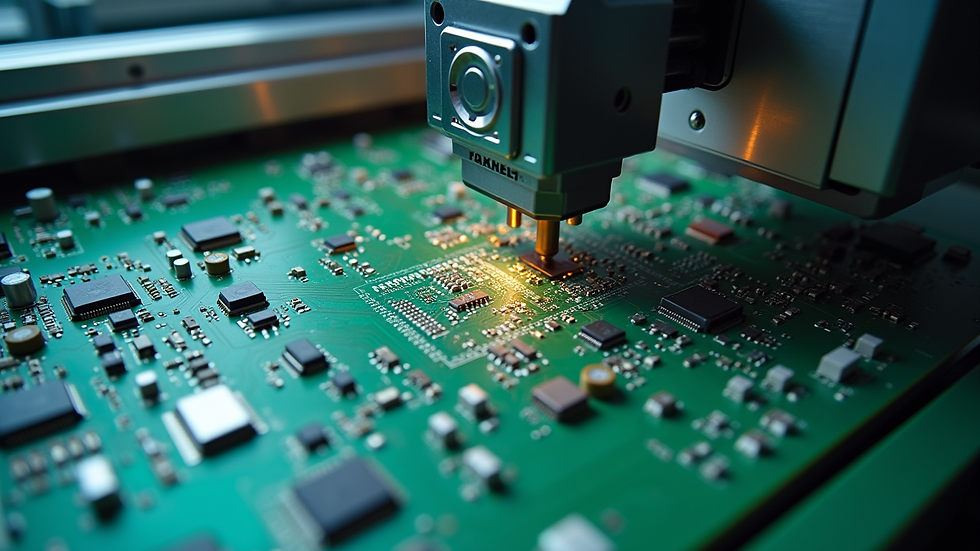
Automated PCB assembly line enhancing production efficiency
Best Practices for Maximizing Efficiency with Custom PCB Assembly
To fully leverage custom PCB assembly, consider these actionable recommendations:
Design for Manufacturability (DFM): Collaborate with your manufacturer during the design phase to ensure the PCB can be produced efficiently.
Standardize Components: Use common components where possible to reduce lead times and simplify inventory management.
Optimize Layout: Minimize trace lengths and avoid complex routing to reduce signal issues and assembly errors.
Implement Quality Control Early: Integrate testing checkpoints during assembly to catch defects early.
Use Modular Designs: Design PCBs in modular sections to facilitate easier upgrades and repairs.
Leverage Advanced Assembly Techniques: Utilize surface-mount technology (SMT) and automated optical inspection (AOI) to improve accuracy and speed.
Applying these practices will help you reduce production delays, lower costs, and improve product reliability.
Partnering for Success with Custom PCB Assembly Solutions
Choosing the right partner for your custom PCB assembly is crucial. A reliable contract manufacturer will provide certified services that meet industry standards and deliver on time. They will offer expertise in design, prototyping, testing, and full-scale production.
I have found that working with a partner who understands the specific demands of aerospace, defense, medical device, access control, automotive, and consumer electronics industries makes a significant difference. They can tailor processes to your unique requirements and ensure compliance with regulatory standards.
For companies seeking to maximize efficiency, I recommend exploring custom pcb assembly solutions that offer end-to-end support. This approach streamlines your supply chain and reduces risk.
Driving Operational Excellence with Custom PCB Solutions
Efficiency gains from custom PCB solutions extend beyond manufacturing. They impact your entire product lifecycle, from design to deployment. Faster turnaround times enable quicker market entry. Higher reliability reduces warranty claims and service costs. Better scalability supports growth without disruption.
By integrating custom PCB assembly into your operations, you position your business for sustained success. Focus on continuous improvement, invest in quality partnerships, and maintain clear communication throughout the process.
Maximizing efficiency with custom PCB solutions is not just a technical challenge - it is a strategic imperative. Embrace this approach to deliver superior products that meet demanding industry standards and customer expectations.


Comments